



CHRPA Commissioners and Staff
Neglected emaSwati with disabilities stripped of land rights

By Vuyisile Hlatshwayo
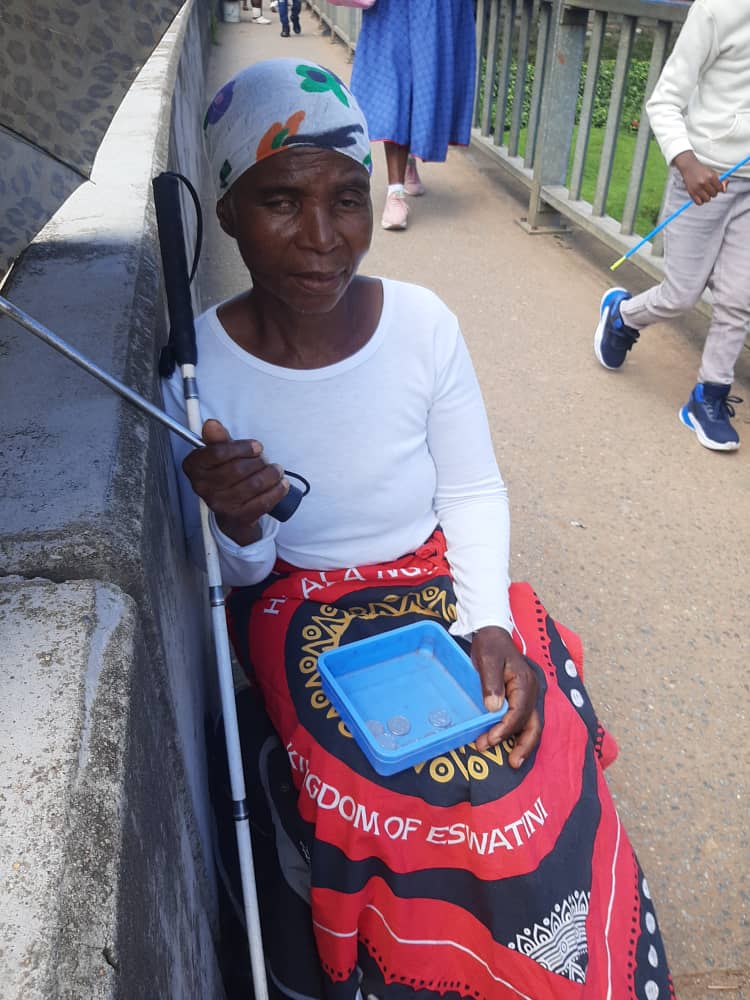
The frustrating, non-stop rains have come and gone. The rural community is now abuzz with farming activity – the primary source of both sustenance and income for the rural families. As the maize farming season has begun in earnest for the heads of families countrywide, one visually impaired family head, Judah Sylvester Mkoko from the Mafutseni Chiefdom, cuts a forlorn figure due to his landlessness. His plight mirrors the often-overlooked systematic failure of families, communities, traditional structures and government agencies – especially the Social Welfare Department (SWD) and Commission on Human Rights and Public Administration (CHRPA) – to protect the land rights of people with disabilities in eSwatini.
The 61-year-old is worried sick that he will, once again, miss this year’s planting season due to the persistent failure of the Mafutseni Royal Kraal libandla, Manzini Ndabazabantu (King’s Liaison Officer) and other statutory bodies to resolve a protracted land matter between him and his elder brother, Themba, to ensure his fundamental right to land access. He reveals to Inhlase that Themba is fighting hard to strip him of his birthright to inherit land anywhere near the Mkoko’s ancestral land in Mafutseni, to build a home for his own family and produce food rather than live on handouts.
Brother Against Brother
“My elder brother has always wanted to evict me from our parental home because of my disability. I’ve been suffering his abuse silently for years, hoping that his negative attitude towards me would change – especially after taking a wife. However, it hasn’t. He’s been to umphakatsi, police and magistrate court looking for support to remove me,” Judah discloses, while freely sharing with this publication some documents to corroborate his story.
According to him, Themba had earlier influenced the previous bandlance to allocate him an inhabitable land tucked away in the forest. Upon site inspection, he says, the representatives of the Federation of Disabled People of Swaziland (FODSWA), the Human Rights Commission, and the Social Welfare Department overturned that decision because the place was unsuitable and isolated for a person with visual impairment. However, the land matter has been left hanging since the previous badlancane vacated office.
Recognising that the land wrangle is taking a toll on the life of the father of three, the incoming Indvuna Dumisani Dlamini-led badlancane stepped up the efforts to resolve it. It convened a meeting for the Mkoko family council made up of Judah’s uncles, who unanimously agreed to allocate him a piece of land in one of his father’s fields that are part of the ancestral lands. However, his elder brother objected to the elders’ decision when bandlancane was ready to ‘tie the knot’ – a siSwati equivalent to the sod-cutting ceremony conducted on the allotted piece of customary land overseen by Chiefs on behalf of the King.

Asked about Plan B, Indvuna Dlamini discloses that his committee allowed Themba to appeal the elders’ decision to Chief Ngalonkhulu Mabuza and his inner council. However, Judah complains that the Chief’s libandla has put this land issue on the back burner. He explains that at its last meeting on November 30, they set January 11, 2026, to deliberate on the land access matter. He bitterly complains about being sent from pillar to post in all the avenues where he sought a solution to this often-overlooked land access issue affecting people with disabilities across the country.
Drawn to comment, Themba has asked not to comment on the land matter before libandla, claiming that renders it ‘sub-judice.’ He, however, confirms that umphakatsi has summoned the Mkoko family members to appear before it on January 11, 2026, to discuss it.


Violation of Swazi Law & Custom
In a similar case, 65-year-old amputee, Sipho Dube of Bethany area under the Lobamba Lomdzala Chiefdom, has been rendered landless by his family members. In September 2021, at the beginning of the farming season, they stripped him of his land rights. They ordered him to immediately stop cultivating his field, which he claimed his late father had allotted him. To his astonishment, this land grab was sanctioned by the Lobamba Lomdzala Umphakatsi without soliciting the views of the Dube family council (lusentfo), in violation of Swazi law and custom.
On 6 November 2024, umphakatsi sent correspondence through Indvuna Bheki Dube, who is a close relative, evicting him from his parental home because of allegedly harassing and abusing his elderly mother and family members, through a letter seen by Inhlase. It also contains witchcraft allegations attributed to Sipho, which he denies in an interview. This letter, therefore, requests that Deputy Prime Minister Thulisile Dladla, whose office houses the Social Welfare Department and Disability Unit, assist in finding a suitable location to build a house for him.
Asked for comment, Indvuna Bheki argued that: “Sipho’s disability rights cannot override the human rights of his elderly mother and other family members. His eviction is our last resort as Indlunkulu to bring harmony to the Dube family. We don’t want to see his elderly mother die of heart failure,” pointing out that they were still waiting for the DMP’s response to their letter.
When Inhlase contacted the DPM about the content of the letter, she responded: “I’d never received any correspondence from that umphakatsi.” However, the DPM’s Office has not yet followed up on his eviction, despite Inhlase drawing its attention to it. When this reporter visited him after the November heavy rains had collapsed part of his ramshackle house, Sipho showed him the field with maize plants and a slab overgrown with grass for his home that was not to be.
Sipho echoes Judah’s concerns that he has exhausted all avenues, including the Social Welfare Department, ka-Ndabazabantu, the UNESWA Legal Centre, and the Human Rights Commission, in pursuit of justice, but to no avail.
“There is nothing worse than losing one’s birthright after the tragedy of disability struck. My life is worse than death because all my family and community have turned their backs on me. Worst still, one doesn’t get help from the structures purported to offer help,” he bemoans his fate.
Reached for comment, his elder brother, France, a family representative, refused to give an interview about his sibling’s landless plight. He pointed out that he did not talk to strangers, declining the opportunity to provide the Dube family’s side of the story.
This reporter contacted CHRPA Executive Secretary Phakama Shili. Despite calling him multiple times, he neither responded to a questionnaire nor answered the phone after his promise. Sipho also confirms that he lost contact with the CHRPA’s Ndwandwe, his point of contact, the moment he walked out of the CHRPA Offices at the Sibekelo Building in Mbabane.
Broken Marriage
Another visually impaired person, Nomsa Mdluli of Mahebedla Chiefdom, faces the same predicament. She claims that her non-disabled husband, Samuel Dlamini, and stepchildren have made her life difficult in the home she had helped build with her alms. She complains that her alleged ‘abusive’ husband has ganged up with his children to evict her from her home because it is located on a piece of land belonging to the first wife, who left him to marry another man. Angered by her resistance, they have intensified their alleged abusive conduct.
“At times I’d be forced to sleep edladleni to let his daughters use my house with their boyfriends. I got fed up and decided to lock them out, forcing them to use the kitchen. Dlamini also asked me to let them and his ex-wife use my house to perform a certain ritual, which led me to lock my house and disappear quietly on the day,” she discloses.
Nomsa adds that their abusive conduct got worse, such that they ended up throwing her clothes and belongings outside the house on rainy days. They told her to leave because her house is on their mother’s property. She is, however, stuck because the Mahebedla bandlancane has made a u-turn on its earlier decision to allocate her a plot despite her multiple reports of her broken marriage.
“I don’t understand why bandlancane is not applying customary law which allows a woman to acquire land through her son. I’ve two grown-up sons; one lives in Gobholo and the other in South Africa. But they insist on allocating me land only in Dlamini’s name. This is problematic because when I die, he or his children will inherit it.”
In response, Mahebedla Indvuna Pat Sikhondze and Dlamini downplay her alleged abusive marriage and land access concerns. They confirm that bandlancane has advised her to let Dlamini ‘andzise titja’ – meaning allowing Dlamini to acquire another piece of land to build a new home for her as his second wife. Still, it must be registered in his name as the family head. They have reached a deadlock because, according to them, she does not listen to bandlancane.
Unconstitutional
This denial of land rights of people with disabilities contravenes sections 19 and 30 of the Eswatini Constitution Act 1 of 2005. Specifically, Section 19 provides for the protection of a person from deprivation of property, stating that “a person has a right to own property…” Section 30 guarantees the protection of the rights of people with disabilities, providing that persons with disabilities have a right to respect and human dignity, and the government and society shall take appropriate measures to ensure that those persons realise their full mental and physical potential.
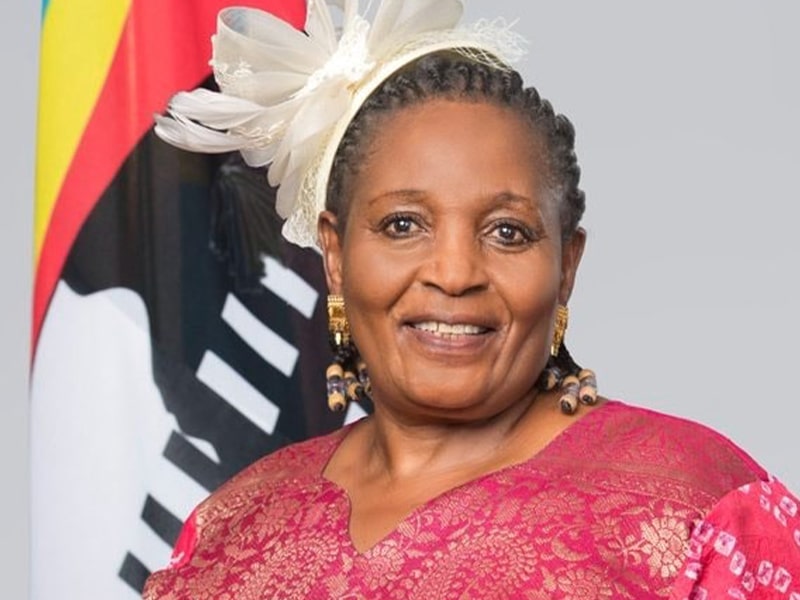
When contacted, FODSWA Project Coordinator Nontobeko Makhukhula emphasises the government’s failure to implement the disability legislation and international instruments. She points out that there is the National Persons with Disabilities Act No 109, 2018, the National Disability Plan of Action (NDPA) 20254-2028, and the United Nations Convention on the Rights of People with Disabilities (UNCRPD), all of which are meant to protect the human rights of people with disabilities in the country.
She confirms cases of land-grabbing against FODSWA members perpetrated by families and communities under the watch of the traditional leaders. She laments that they are neglected, unvalued and discriminated against in their own families and communities. She blames it on the stereotypical belief that people with disabilities are worthless and therefore not fit to own land.
“It starts with the families at home, when even if you are a head of the family, they don’t see your value. They have doubts about how he can use the land. Despite our advocacy campaigns, the community leaders still lack knowledge about disability rights. Some still treat people with disabilities as minors and misfits. They must sit down, and they will feed you,” she complains.
FODSWA vice-chairperson, Phumelela Khumalo, shares the same sentiments. He takes a swipe at the failing government bodies and traditional structures to champion the quality of life of people with disabilities. He condemns the family members who grab the land of the disabled members.
“It’s inhumane that a person with a disability can be deprived of his land, especially by a family member. When your parents die, you are chased out of the home. I don’t understand where they want you to go. It’s a pity that even where you expect to get assistance, you just don’t get it,” he laments.


Poverty Trap
In a country where customary land under chiefs is on sale, the people with disabilities, who subsist on a measly E450 social grant, are trapped in poverty. Inhlase has uncovered that a piece of land costs E60,000 in Mahebedla Chiefdom, where homes are mushrooming all over. The land sellers have turned rogue, selling one piece of land to two or more buyers, fuelling the simmering land disputes.
“After paying E27,500 as part of my E60,000 price for my plot, I almost fainted when I found my fence removed. There was a pile of sand to indicate a new owner. When I approached the seller, he said I shouldn’t worry because I’ll get a refund,” he reveals.
With the uncontrolled sale of land on Eswatini Nation Land, people with disabilities are poised to lose their land rights.


